Electrical and Electronic Engineering + ML

Signals, systems &
machine learning.

I build signal-processing and machine-learning pipelines for sensor and biomedical data, with rigorous evaluation, failure analysis and testable software prototypes.

Yangdeyi Yang · Cork, Ireland
MEngSc candidate, UCC · Research experience at Tyndall

What I bring

Tools used across these projects: Python · NumPy / SciPy · scikit-learn · PyTorch · Git · automated tests & CI

01 / Selected work

Engineering, with evidence.

The problem, my contribution and the evidence.
Open each case study for the full method.

02 / Biomedical signal processing

EEG seizure detection

Turn multichannel scalp EEG into inspectable, patient-specific seizure events.

I implemented preprocessing, spectral and synchrony features, fold-local feature selection and a Random Forest pipeline, with event-level error analysis.

53 / 55 seizure events detected0.307 false alarms/hour · 10 subjects · 580.57 hours
Retrospective, patient-specific study

Skills demonstrated: biomedical signal processing, event-level evaluation and error analysis.

The study does not establish performance on unseen patients.

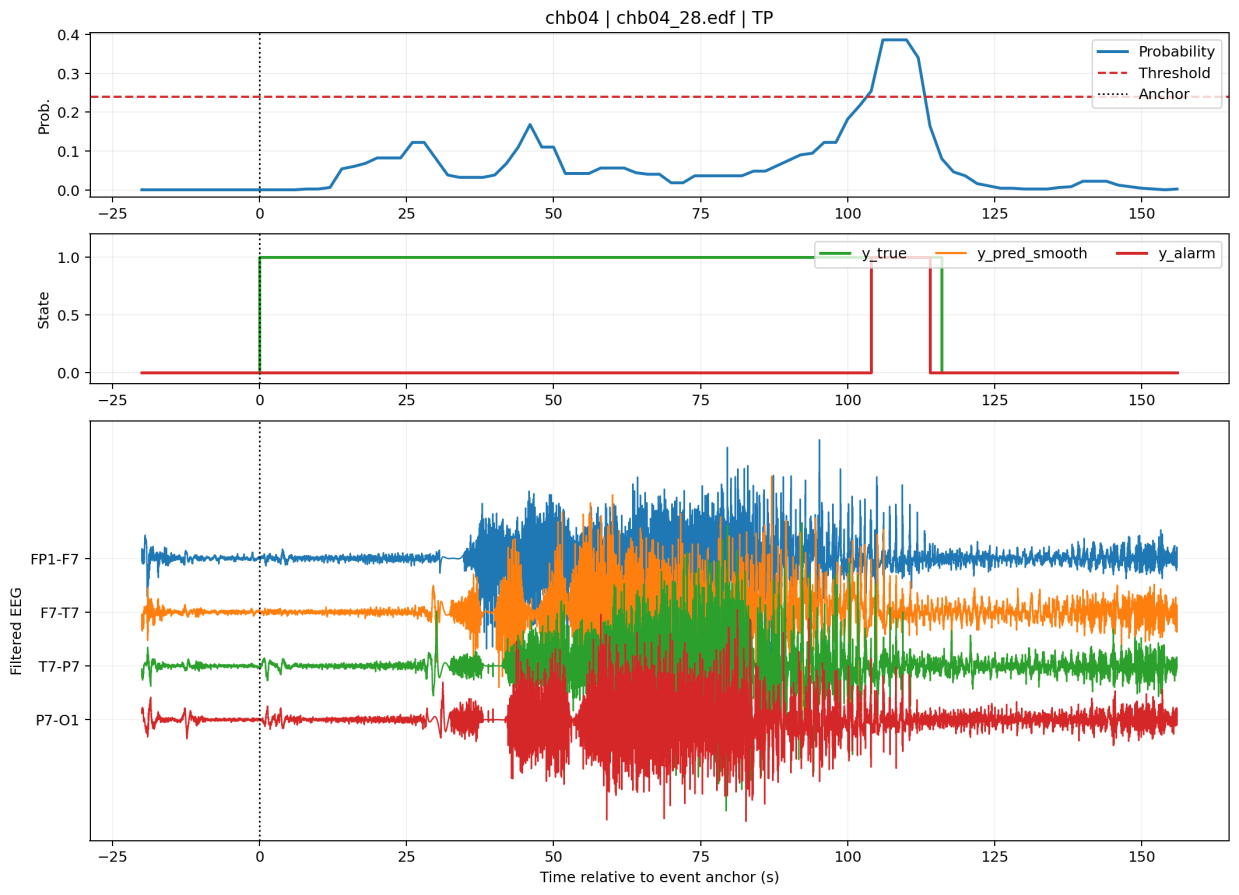
Delayed true-positive EEG detection example
A delayed detection from the separate error-analysis study.

03 / Digital signal processing

EEG multirate DSP

Reduce the sampling rate while protecting the useful EEG analysis band.

I designed an 8/125 rational conversion and Kaiser FIR, implemented a direct reference, and integrated a polyphase resampler with the same coefficients.

500 → 32 Hz93.6% fewer samples · protected band: 0.5–12.5 Hz

Skills demonstrated: filter design, numerical equivalence and spectral validation.

Validated on one 60-second recording; clinical performance was not evaluated.

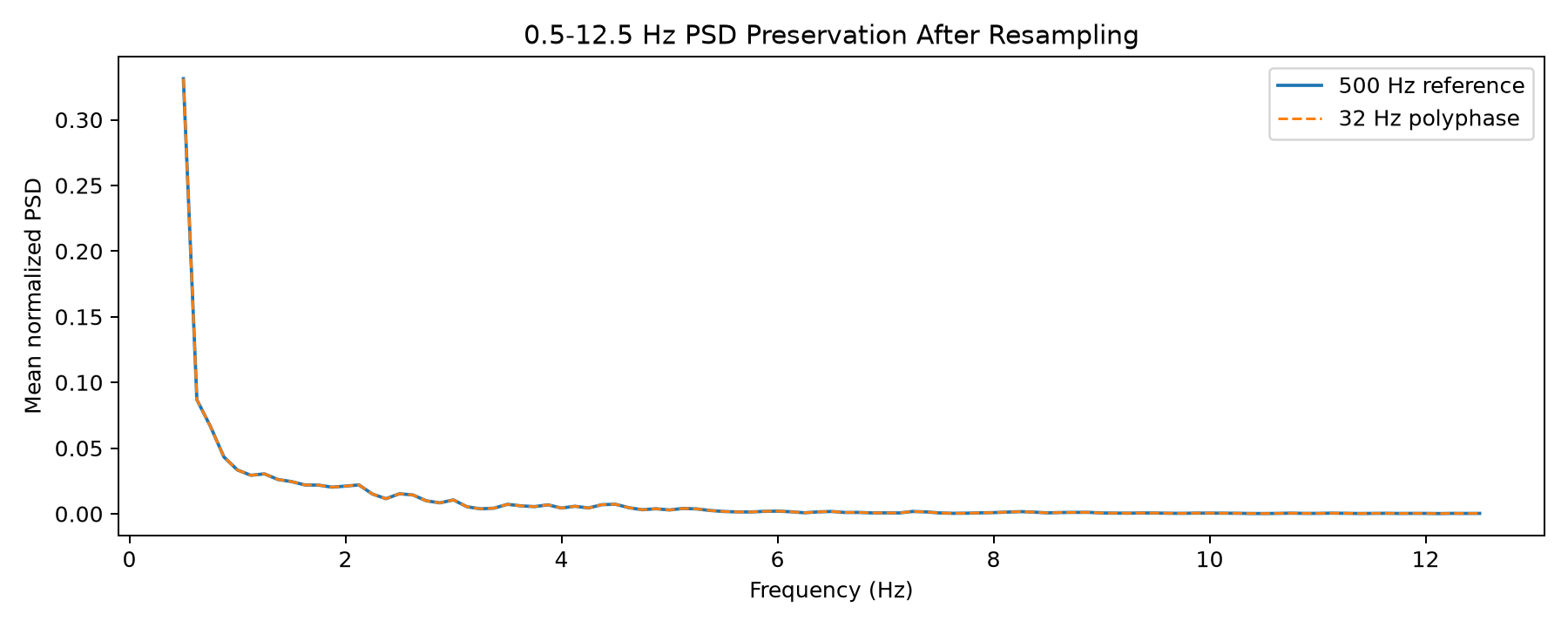
Reference and resampled EEG power spectral densities
Mean normalised PSD before and after resampling.

04 / Engineering prototype

Eight-channel EEG simulator

Make the signal source, device interface and verification path testable before hardware is available.

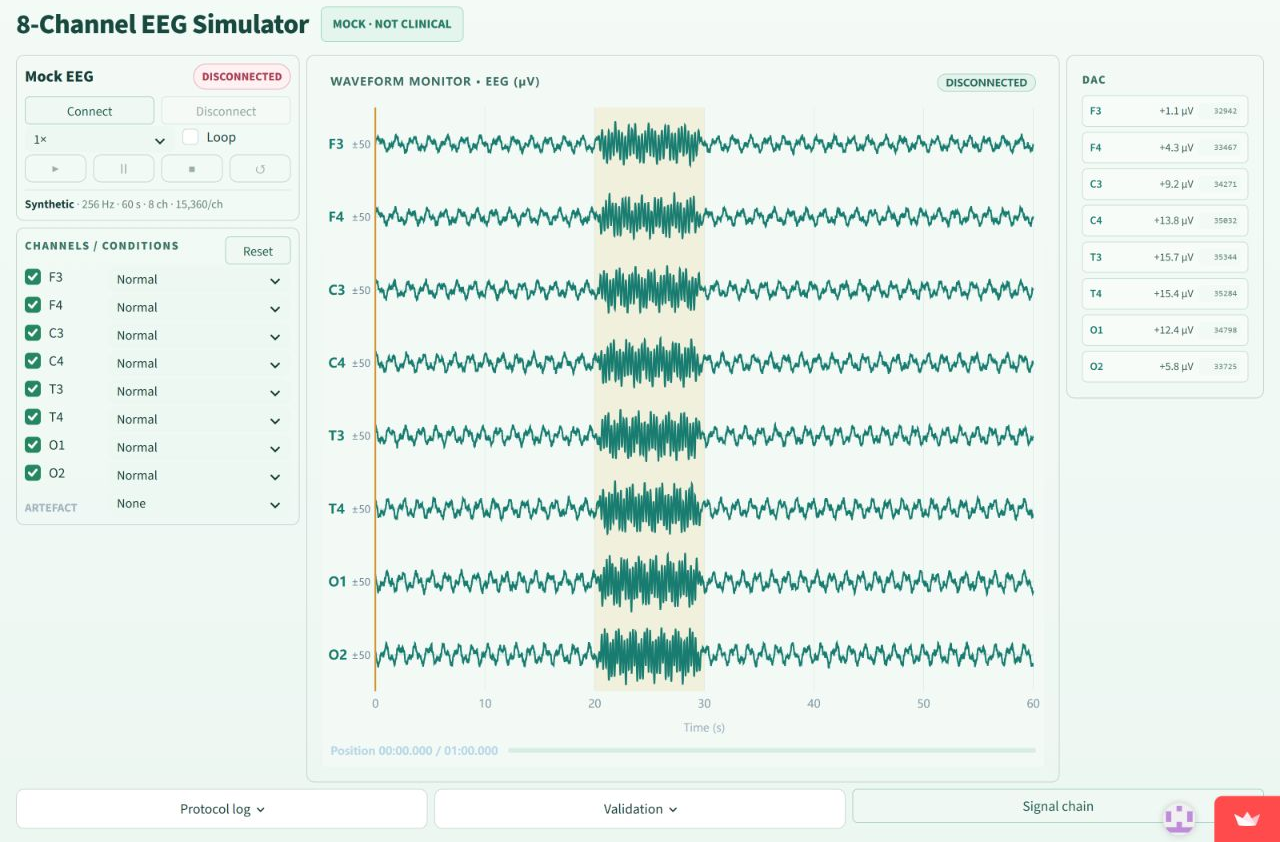
I built Python desktop and browser controls for synthetic or recorded EEG, playback, channel conditions, fault injection and a virtual 16-bit DAC mapping.

8 channels · ±200 µV target rangeSoftware verification complete; physical analogue output remains proposed.

Skills demonstrated: software architecture, interface design and verification planning.

Eight-channel EEG simulator
Desktop control, signals and verification in one inspectable prototype.

Additional work

Patient-independent neonatal EEG detectionEngineered single-channel Cz-C3 features and compared models with leave-one-recording-out validation, keeping fold-local processing explicit.

Team conceptsProposed an IoT livestock-health monitoring architecture for agriculture and an edge–cloud EEG monitoring architecture at the MedTech Hackathon (2026).

02 / Experience & background

An engineering foundation.
A research mindset.

I am an MEngSc candidate in Electrical and Electronic Engineering at University College Cork. My work connects signal processing, machine learning and the practical questions that determine whether evidence transfers beyond a lab setup.

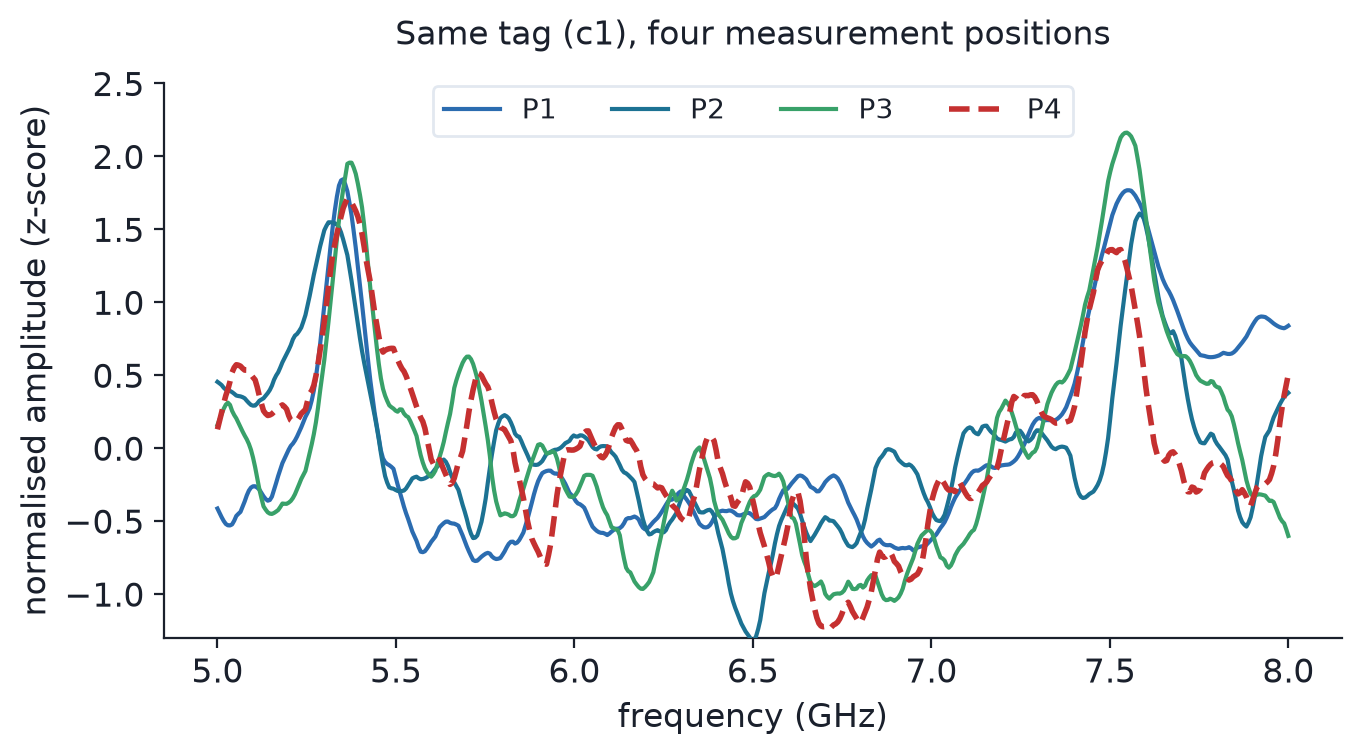
2026 · Tyndall National Institute: Machine Learning Research Intern, CRFID sensing under reader-geometry shift.
2025–2026 · UCC: MEngSc Electrical and Electronic Engineering.
2020–2024 · UCC: BE Electrical and Electronic Engineering.

Education, experience & CV →

03 / Contact

Let’s talk engineering.

For graduate roles, research opportunities and technical conversations.